
“One Scan Saved My Life:” Shira’s Surprising Diagnosis With EGFR+ Lung Cancer
Shira was the picture of health. She is a lifelong athlete, a mother of four, and a dedicated runner who logged miles effortlessly. She is also a nonsmoker and had no family history of lung disease, making her eventual EGFR-positive lung cancer diagnosis a complete shock. Her experience began not with symptoms, but with a preventative full-body MRI her husband encouraged her to take. While the scan was intended to offer peace of mind, it instead revealed a “minor” finding on her lung. Because MRIs are not typically used for lung evaluation, the finding was initially dismissed, but Shira’s intuition and the nudge of a family loss pushed her to investigate further.
Interviewed by: Taylor Scheib
Edited by: Chris Sanchez
Leveraging her connections in the healthcare industry, Shira consulted Dr. Kim Sandler at Vanderbilt University Medical Center, who immediately recognized the concern. Within a whirlwind week, Shira went from a six-mile run to a diagnostic CT, a bronchoscopy, and finally, a confirmation of adenocarcinoma. The tumor was “on fire” — fast-growing but fortunately contained. She underwent surgery to remove the mass just days later, bypassing chemotherapy and radiation due to the early detection.
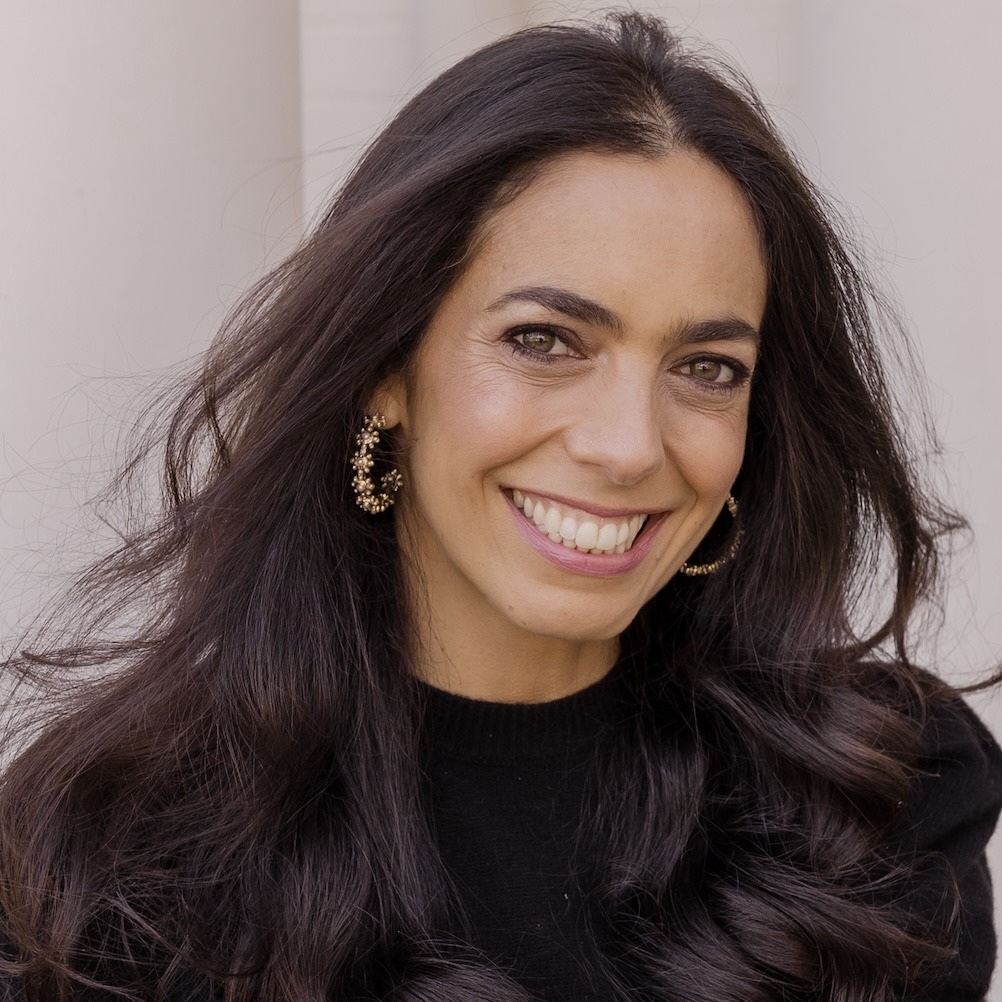
Now cancer-free, Shira’s relief has transformed into a powerful advocacy mission. She realized that current screening guidelines miss a vast number of non-smokers like her, leaving them vulnerable until it is often too late. Through her book and non-profit work, she is fighting to change the narrative around EGFR-positive lung cancer and lung cancer in general, dismantling the stigma that it is a “deserved” disease, and pushing for standard CT screenings at age 40, alongside mammograms, to save more lives.
Find out more about Shira’s story by watching her video and reading the edited transcript from her interview.
- Cancer doesn’t care about lifestyle. Shira’s story illustrates a universal truth: you can eat right, exercise, and never smoke, but if you have lungs, you can get lung cancer. The disease does not discriminate based on how “healthy” you appear
- Trust your instincts over “minor” findings. Even when a scan result is labeled “minor” or incidental, following up with a specialist, specifically a pulmonologist or thoracic expert, can be the difference between stage 1 and stage 4
- Advocate for better screening. Current guidelines often exclude non-smokers, yet many newly diagnosed patients don’t fit the criteria
- Requesting CT scans. Shira urges patients to ask their doctors about CT scans, even if they have to pay out of pocket or push for insurance coverage
- The power of “scanxiety“: The emotional toll of survivorship doesn’t end with remission. Shira candidly shares the reality of “scanxiety” — the intense fear before check-ups — and how she manages it by stacking appointments to minimize the days she spends worrying
- Transformation into advocacy. Shira turned her traumatic week of diagnosis into a lifelong purpose, shifting from a private person to a vocal advocate working to change national health policies and lower the cost of life-saving scans
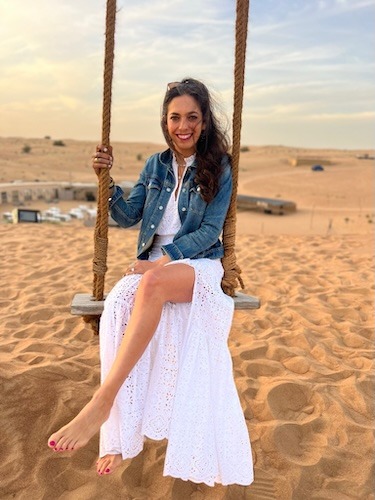
- Name: Shira B.
- Age of Diagnosis:
- 43
- Diagnosis:
- Non-Small Cell Lung Cancer (NSCLC)
- Staging:
- Stage 1B
- Mutation:
- EGFR exon 20 insertion
- Symptoms:
- None per se; discovered during a preventative full-body MRI
- Treatment:
- Surgery (thoracotomy)

This interview has been edited for clarity and length. This is not medical advice. Please consult with your healthcare provider to make informed treatment decisions.
The views and opinions expressed in this interview do not necessarily reflect those of The Patient Story.
- Who I am
- Running through an EGFR-positive lung cancer diagnosis
- The decision to get a full-body MRI
- Full body MRI findings: A "minor" spot on the lung
- From MRI to diagnosis: Advocating for a chest CT
- Surgery and recovery: "Cancer doesn't care"
- Breaking the news to my family and kids
- Processing the shock: anger, denial, and gratitude
- Advocacy: Pushing for lung scans at age 40
- Understanding biomarkers: EGFR exon 20
- Cancer doesn't care: Challenging the stigma
- The role of support systems and early detection
- Advice: Advocate for your health and ask for scans
- Finding purpose: My mission to save lives
Who I am
My name is Shira. I live in Nashville, Tennessee, and I am a lung cancer survivor. I was diagnosed in October of 2025, and I have been cancer-free for three months.
I grew up in Santa Barbara, California, and both my parents are doctors. My dad is actually a lung specialist, which is quite ironic in this whole process. My two brothers are orthopedic surgeons, still in Santa Barbara. My husband and I met in San Francisco, and we have four children. Our oldest is a freshman in high school. I have boy-girl twins, and they lived in seven states before they turned ten, so we moved a lot. They were born in New York, my third was born in San Diego, and my fourth was born in Newport Beach. Then we lived in New Orleans, Washington, D.C., and Montana. Now we live in Tennessee.
I am grateful and hopeful that I am done moving for a little while. Nashville has been great. I have two in high school, one in middle school, and one in lower school, and they are all together at the same coed, non-denominational school on the Vanderbilt campus. It is one drop-off every morning, and I love it. I load them up in the minivan and take them all to school, and the afternoons are insane, running around between all their sports and activities, but it is fun.
Running through an EGFR-positive lung cancer diagnosis
Since I was young, I played sports just like my kids are doing. I always loved running. My dad loves to run too, and one of my brothers loves to run; it is something we have always done. I think it is important, and it is fun because you can do it anywhere you are. Wherever you are traveling for work or for fun, you can always go for a run. It is harder to find a group of nine other people to play a pickup basketball game, but you can always go for a run.
I grew up running and playing a lot of sports. Basketball was my big sport in high school. Even though I am towering at 5’5″, I figured out how to be scrappy enough at point guard. I just love to run. That is my mental health outlet and my saving grace. It is what I do when I am the most stressed out and the most anxious about anything — I go for a run.
When I ended up with EGFR-positive lung cancer, I just kept telling them, “Wrong person, I just ran, I just ran.” I think it is fascinating that I literally went for a six-mile run the morning of my scan. I was the person who showed up at the scan kind of sweaty, and I was like, “Sorry, I’m sweaty. I just ran six miles.” When I went in and had my pulmonary function test after they found the cancer, the surgeon came in and said, “I’ve never seen someone with such strong lung capacity. You are right that you are a runner and that your lungs seem to be operating.” They had compensated for the cancer and taken over, and I was still running. I am still running now. I took off two months and started running again, and I am back to running my six-mile loop with my girlfriend in the mornings.
The decision to get a full-body MRI
My parents are both doctors, my brothers are doctors, my grandfather is a doctor, and my father-in-law is a doctor. We have all been in the medical community forever. I even studied molecular and cell biology in undergrad, so it has always been interesting, and we have always paid attention to it. My husband runs a healthcare investment firm now, and he worked in the government running innovation for Medicare and Medicaid, too.
For example, when 23andMe first came out, we were quick to buy the kits, spit in them, and learn more. We both had our full genomes sequenced about five years ago because we found it interesting. When the Grail Galleri blood test came out for cancer detection, we were doing it every year because we found it interesting. When these full-body scans came out, he ran in to do it, and I didn’t because I am claustrophobic. I have to do a breast MRI every year because my mother is a breast cancer survivor, and I have to wrap my head around that mentally for days before. I sometimes get a Valium pill, and I just hold it in my fingers really tight, hoping for osmosis because I don’t actually want to take the medication. I am really active, and I eat healthy, and I am not somebody who takes medicine, so I don’t want to take it.
I hold it up, and I know that it is just a mental block because no one else runs out of oxygen in the tube, but I have that. I think it is combined with the anxiety of my mom going through breast cancer and going with her for these mammograms and MRIs. When I get into the machine, I completely panic. When he started getting these scans, I rolled my eyes and didn’t want to do them. I would get my blood work done and do the other things.
When we were in New York over the summer, he pushed me again and again to get the scan, and I canceled the appointment again and again. Ultimately, I went for a run, went and got the scan, and held the Valium between my fingers in a total panic for 45 minutes. I know that they are open on both ends now, and I know that they will pump in music, or you can watch a TV show or a movie. It doesn’t matter. My eyes are clenched shut, the Valium is between my two fingers because I don’t want to ruin my day, and I try to sing to myself over and over again to get through it. “That is ultimately the scan that saved my life and found it.”
Full body MRI findings: A “minor” spot on the lung
The scan I got was called Prenuvo. I have worked with them a lot over the last couple of months. What was interesting about it, and what I have learned through this process, is that when you look at somebody’s lungs, an MRI is not as good. An MRI is better for your liver, your kidney, and the bigger organs, your brain, but for your lungs, because your lungs are mostly air, it is not as good.
When the scan came back, it actually found a mass in my lungs, but it said that if I was not symptomatic, I didn’t really worry about it. It is a minor finding. I was not symptomatic. As I said, I was running, and it kind of dismissed it a little. I don’t want to blame them for that. I think there is a missed opportunity because an MRI isn’t great for the lungs, which is something I learned later. When I shared the scan with my dad, who is a lung doctor, he said, “The lungs aren’t… that’s not how we look at lungs. We really use a chest CT.” He said, “You should follow up with that in a couple of months.” To be honest, I kind of put it on the back burner. There was nothing else significant in my scan, and it was considered a minor finding.
I credit a lot — my aunt was sick and dying of stomach cancer, and she and I were very close. She passed away at the end of August. It was after that that I thought more about the scan. I don’t know if she went up there and nudged me a little bit. Ultimately, I went at the very end of September and had a chest CT. I asked for the CD like old school from the doctor, and I took it and actually gave it to a girlfriend of mine. Dr. Kim Sandler is a lung cancer radiology specialist here in Nashville at Vanderbilt. She and I met about four and a half years ago. Her kids go to the same school as mine, but we are all friends, though our kids don’t really overlap.
I continue to keep in contact with her. She is a powerhouse in the lung cancer screening world. We would have sushi once or twice a month, and she would share with me all of her research. She gets to travel all over the world and speak about lung cancer, which is really cool. She would say, “I’m going to Spain and London,” and we would pick out our outfits and discuss what she was talking about. I would read her slides, and we just became friends.
From MRI to diagnosis: Advocating for a chest CT
When I got the CD, I took it to her husband because she is working in the hospital all the time, and he brought it to her. She looked at it on a Saturday night and called me. I learned later that she knew instantly that it was likely lung cancer. She called one of her favorite pulmonologists. She booked me an appointment. She booked me a diagnostic CT scan, which, instead of looking at the tumor with five-millimeter slices, does a one-millimeter spiral slice. She even booked an O.R. room for a bronchoscopy for the next day, but didn’t tell me. She just called and said, “Hey, I’m looking at it. I want you to redo the scan. I want you to meet the pulmonologist. And where is your husband?”
She called him, and she shared more with him than she did with me, and told him to get home immediately. That was a Saturday night.
He flew home on Sunday. I went for my six-mile run on Monday morning. I went and had the spiral CT at Vanderbilt, and then I drove to the pulmonary specialist’s office. Kim called me and said, “My partner read your scan.” I said, “Okay.” And she said, “Where’s Adam?” I said, “He just landed. He’s on his way to the hospital.” She said, “Okay,” and hung up. I think she couldn’t be the one to say it without someone there with me. My husband has a knack for timing. He is always late to everything, but he shows up just in the nick of time. I went through and had the blood pressure, height, weight, and all the prep. I was sitting in the room by myself, and as the pulmonary specialist walked in, he walked in. That is when they said they thought I had lung cancer and that they had booked me a bronchoscopy for the next day. They would put me out, put me on a ventilator, and take a piece of the tumor to test it.
That was kind of the beginning. We told the kids that night. Tuesday, I had my bronchoscopy. When I woke up from the bronch, I even told the pulmonologist, “Wrong person, right? Wrong scan. I don’t have lung cancer. I’m a runner. Is this malpractice?” He just looked at me and said, “No, Shira, you have lung cancer.” Which is still hard for me to believe, to be honest.
Ultimately, on Wednesday, the lab work came back, and it said adenocarcinoma. Thursday, I met a surgeon and did my pulmonary function test, at which point he was like, “They look perfect.” Then Friday, I went in for a PET scan. Actually, my friend Kim’s dad is the nuclear medicine doctor at Vanderbilt. He did my PET scan, and he was awesome. He came in right away and just said, “Look, it’s on fire. I don’t see any lymph nodes. I don’t think it’s spread beyond your lungs, but you need to get it out.” That is the first time that I think I panicked the most. I went straight to my husband, and I was like, “You’re a bulldozer. I need this out. I want it out on Monday. I don’t want to wait anymore.” Even the nuclear medicine doctor said, “You need it out. It’s on fire.” Meaning it appears to be fast-growing. “We don’t see it in your lymph nodes. You have got to get it out as soon as possible.”
Surgery and recovery: “Cancer doesn’t care”
They took it out first thing Monday morning. That was in October. It feels crazy because I only knew that I had EGFR-positive lung cancer for a week, which I think is an insanely short amount of time for people who go through this. I am really lucky, and I think a lot of that is because we are in the healthcare industry. What are the chances that the girl I have sushi with two days a month is also the premier lung cancer radiologist, and her dad is in charge of nuclear medicine? All these things worked out. I say it was meant to be, and it kind of all worked out.
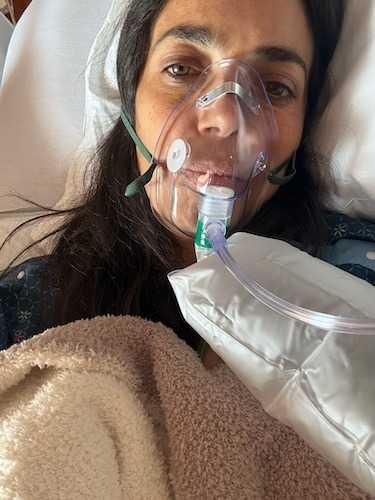
I also think, and I know how lucky I am, that not only are we tied into the healthcare industry, but I could also afford these scans. I know they are not affordable, and that is something I am really working on. After that week, I had it out and was in the hospital for a few days with the terrible chest tube, and then came home. I started doing more research because I wasn’t allowed to run for a couple of weeks, and I had to sit and lie and relax for a little bit.
It was during that research that I really learned that I am not unique in all of this, and that it is not rare. That is when I started to kind of panic. That is why I wrote a book, started social media, and did things like that this month. What I realized was, number one, cancer does not care. It doesn’t matter if you have connections in healthcare and this and that, but if we can scan people earlier, it is just a better outcome later. For example, mammograms — now we all get mammograms at 40. People are still dying from breast cancer, but a lot fewer people because we are catching it a lot sooner. Same thing with the colonoscopy; they just moved it from 50 to 45. It is terrible to go through breast cancer, and it is terrible to go through colon cancer, but we are catching it where we can treat it, and we can survive it.
That is what I realized with lung cancer. In order to be scanned, you have to meet the criteria that are recommended in the guidelines. The guideline criteria is you have to smoke a pack a day for 20 years and be over 55. What I found in my research was that actually less than 30% of people being diagnosed with lung cancer right now qualify for the scan, which means that on the other side, “70% of us, including me, don’t qualify for the scan but are getting lung cancer.” We need to expand that. I was lucky enough that I could pay for it myself, but it is not affordable.
What I started realizing when I was doing all this research was that I was not unique. I was not special. This is everywhere, and people aren’t catching it. What I had a hard time with, which is how I found The Patient Story a little bit, was that I couldn’t find any peers who were lung cancer survivors. It was very difficult to find them because most people catch their lung cancer once it is hip pain, and then the cancer is in their bones and in their brain. That is when I realized I wasn’t unique that I had lung cancer, but I was unique that it was big enough to show up on an MRI, big enough to show up on a CT, and small enough that I could just surgically remove it. I don’t need chemo or radiation. I am not taking any targeted therapies or immunotherapies. They are like, “Okay, we’ll just monitor you. You’re done.” That is the best-case scenario.
I found out today, actually — I started crying at my dentist appointment because I got my teeth cleaned — but my oncologist texted me that my tumor from my surgery just got back, and it was categorized as a low risk of recurrence. I was so glad because that was the last piece of this three-month process of data that I needed. If it were high-risk, they were going to maybe recommend four months of chemo, which I can handle, and I can go through.
The reason I think I was more hesitant about doing the chemo is that to my kids, though they know I had cancer and that I am a lung cancer survivor, they sometimes say, “Well, you didn’t really have real cancer, mom.” I don’t think that is because I didn’t have real cancer, but when they think of somebody with cancer, they think of bald, sick, and tired. I was able to bounce back from surgery, and I am running again, and I didn’t lose my hair. I think it has helped our family and the kids. I don’t think we had that same difficult period that most cancer survivors go through. I feel really lucky. The only reason is that I caught it early. That is the only reason, because cancer doesn’t care. It could have been anyone and everyone. Now I get monitored and checked. My first follow-up check is on Friday. So tomorrow I get my next scan.
Breaking the news to my family and kids
It is interesting; what I found in this whole process is that I am an oversharer, and I tell everyone everything. I have met several lung cancer survivors who don’t want people to know that they are lung cancer survivors and don’t want to talk about it. One didn’t share it with her children. One shared it with her family, but has requested that it never be shared with anyone else. A third shared it with their family but keeps it quiet from the rest of the world. Some of these people are pretty high-profile people who I think would help the lung cancer awareness community. One of them ended up sharing it with her family and friends after we spoke, and she felt like, “I needed you to give me that inspiration to share.”
I think part of it is because when you do share — or for me, with lung cancer — the narrative around it is so negative that it is really fatiguing and hard to hear. When I shared it at first with people that I work with every day — they have known me for four and a half years — their responses were things like, “Oh, I didn’t realize you smoked.” That is really hurtful. I was like, “I’m sorry, you know me so well. Do I even drink alcohol?” And they are like, “No, not really, occasional drink twice a month.” And I am like, “Yes. But you think I’m smoking a pack a day and hiding it from you?” They are like, “Yeah, I guess I’ve never smelled it or noticed it, but you have lung cancer.” I said, “Well, fair, but I’m not a smoker.”
I think that is really hard. It is very fatiguing when people say that, or they say, “Oh, but you’re so healthy, is it that you use a lot of dry shampoo? Oh, is it hairspray? Oh, do you cook a lot in bad cooking oils?” What I found myself doing was defending my behavior. Really, I exercise, I run, I eat healthy, I go for the fridge, not the pantry. I try to do all the things we have been taught to do. What I realized in this whole process is that everyone is protecting themselves. They want to say, “Oh, I don’t smoke, therefore I won’t get lung cancer,” or “I don’t use dry shampoo or hairspray,” and therefore they are protected. It is them protecting themselves, not projecting their negative feelings onto you.
I started realizing that we need to change the whole narrative about lung cancer because people should get their lungs checked. If you have lungs, you can have lung cancer. I never thought to myself when a friend had breast cancer, “Oh, you deserve that,” or “You probably did that to yourself.” What I found with lung cancer is that I have had people tell me that it is a lifestyle choice, that it is a deserved disease, and it is not. It wasn’t my lifestyle choice, and it wasn’t a deserved disease.
When I first told my family that Monday, when they told me it was likely that I had lung cancer, I actually had my husband pick the kids up from school, which was his first time. When the kids came home, and I was sitting on the couch, they walked in, and they said, “Are you guys getting divorced?” We were like, “What? No.” Then they said, “Does mom have cancer?” I was planning on not using the C-word, easing into it. My husband and I froze. We were like, “Why would you say that?” And they said, “Well, Dad’s never picked us up from school before.”
We sat down and walked through that. They found a spot on my lung, and I was having a bronchoscopy. They don’t know what it is. It could be fungal, it could be scar tissue, it could be this or that. My son said, “Well, what is the chance that it’s cancer?” I think he thought we would say like 0.1%. I said 90%. Then they kind of all started laughing. I think it was just a shock that it was like 90% vs 0.1%. Then my youngest started crying. She got scared. We had to calm it down. But it was crazy to hear a laugh at first.
When we told my parents and my in-laws, since they are doctors, it was much more medical. “We want to understand this or understand that.” Even now, I just spoke to my dad in tears after the dentist that my tumor was low risk for recurrence, and he was like, “Well, what did they look at? Did they look at the bronch? Did they look at the tumor from the surgery? What is the metric that they used?” They get very technical.
When we found out it was adenocarcinoma that Wednesday, I was pretty upset. I think that is when reality hit, and it was very scary. That was a Wednesday. On Thursday, it was actually Yom Kippur, and I was hosting 75 people at my house for breakfast. The kids had no school. We went to the temple in the morning, and then I had to leave early because I had to go see the surgeon. I was trying to keep some sense of normalcy with the kids. I would try to make my appointments after I dropped them off at school and picked them up. I was trying to show them that everything was okay.
I walked into the temple, and a bunch of the families we know were kind of walking at the same time. They were like, “Oh, we’re excited for breakfast. Can we bring anything?” I was like, “No.” They were like, “Are you okay?” My hair was in a bun, I hadn’t slept, I had been crying a lot, and I just looked at them and went, “I have lung cancer.” I just blurted it out because I am an oversharer. They froze. My husband is like, “Well, that’s one way to tell people.” They were like, “Well, we’re canceling breakfast.” I was like, “No. Normalcy. I did it last year, I did it the year before, I’m doing it this year.” For me, that is therapy too. So I had 75 friends over. The kids played basketball. We ate bagels, lox, and cream cheese. A lot of the people who came are doctors, so they knew I was going in for surgery. They visited me in the hospital. They were really supportive.
Processing the shock: anger, denial, and gratitude
I still sometimes don’t believe it. I have moments. I cried a lot at first. Then I just needed to fix it and get it out immediately. You get into lockdown mode: protect the children, get it out. Even to this day, I was on the phone with a girlfriend of mine. Her husband is an oncologist, and I didn’t know he was in the background on the call. I called her, and I said, “I think they messed up. I don’t have lung cancer.” She said, “Why do you say that?” I said, “I don’t know. It feels like a bad dream, like that crazy week. And I’m back to running and skiing and going to altitude, and I just feel like they messed up.” Her husband piped up in the background, “Nope, nope. I saw the lab work. You had cancer.”
I think there are moments of denial. Then there are moments where, to be honest, I totally lose it. That happened recently. I lay down in the middle of the hall and started crying because I just felt like I tried to do everything right. I tried to exercise, eat right, and live a balanced life, and spend the time I can with the kids and with my family. Then this happens, and you just think, “What did I do wrong?” As I have done all this research, I have realized that lung cancer research and medicine are actually really far behind other cancers. It is because it was considered a deserved disease and a lifestyle choice. I get very angry about it because I feel like that is not fair. There are other lifestyle choices, and we have medicine for them. I work really hard to make the right choices.
I have moments of being angry, and then I have moments where I am really grateful. I always tell people sometimes, “I’m so lucky, right? That I caught it so early, and then I’m cancer-free now.” It is also really unlucky to have lung cancer. As cancers go, it is not really the best one to get. But I am lucky I got it early.
Advocacy: Pushing for lung scans at age 40
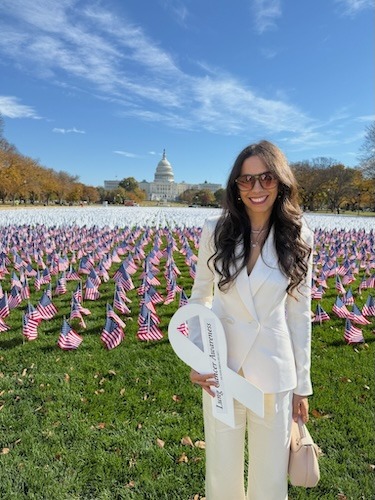
I am really focused on advocacy work and awareness. I am trying to change the narrative for EGFR-positive lung cancer and lung cancer in general, and I am trying to push to get a CT scan like a mammogram. I have really thrown a lot of energy into that. I have a book coming out called One Scan Saved My Life. It is not just my story of the week of cancer, but it is also where our government sits with scans and our healthcare system, and how we can be more proactive and work on being more preventative in our own care. It is a call to action to say we need to get people scanned at 40.
I am trying to enjoy the little things with the kids more, too, because I think sometimes it is all this go-go-go life. You need to stop and say, “Okay, let me just sit and read a book with you.” Every time I get a result, like the tumor today, it brings tears to my eyes. On the other side of it, tomorrow is my big scan. People talk about “scanxiety” — scan anxiety. I am conscious of it, and I try to think about that all the time and pretend that it doesn’t affect me, but it totally affects me.
I think about every little thing. This week, on Tuesday, I was at the breast center because I am now at a higher risk for breast cancer and other cancers. A lot of people don’t realize that if you are a breast cancer survivor, your risk of having a primary cancer in your lung is higher, and vice versa. On Wednesday, I was at the endocrinologist to make sure my thyroid was okay. Today I had a dentist. Tomorrow I will see the pulmonary. They all wanted blood work. I thought, “Okay, do you guys mind putting it in the system, and I’ll do it on Friday?” I never thought in my life that I would think about things like that. I am at the doctor’s every day. Every day they want to prick me. Every day, they want more blood.
Understanding biomarkers: EGFR exon 20
I am doing my surveillance. I get a scan every three months, but I am also doing blood work. Through Tempus, they did a biomarker of my tumor. They check for the liquid biopsy. That is going to be every 6 to 8 weeks.
I have an EGFR exon 20 insertion. EGFR is definitely a non-small cell lung cancer favorite. Unfortunately for me, the exon 20 marker piece is not as good as exon 19. So a lot of the targeted therapies aren’t available for me. They are just coming out with new drugs that are supposed to be on the market this month, but they have only been tested on stage 3 or 4. I am lucky that my EGFR-positive lung cancer is only stage 1B, so they are holding off on giving me those because the side effects are things like pneumonitis and pneumonia, and I am already missing half my right lung. Those aren’t good side effects for me.
I wasn’t educated about biomarkers until I needed to be. I knew a little bit from when my mom had breast cancer. With this, I sat down and learned all of them from a breast cancer oncology specialist in town who is a good friend. Even though she didn’t have a lung, when I first found out and called her, she was like, “Okay, we need to get this, this, this to send to Tempus. The blood work before bronch. The blood work after bronch. The blood works before surgery, and after.” She took control of a lot of that for me until Vanderbilt assigned me to an oncologist who focused on lungs.
I found it really interesting when I started doing even more research on EGFR-positive lung cancer about the prevalence in the non-smoking community, but especially in Asian women. They had done studies in Taiwan that Asian non-smoking women were getting cancer at a faster rate than the Taiwanese men who smoked. They thought it was maybe cooking oil because in Taiwan, the women cook a lot. So they redid the study in New York and found the same outcome. In New York, people don’t cook as they do in other parts of the world. They found the same outcome. When I found out I had EGFR-positive lung cancer, I found it interesting. I am not Asian. It is about more than that, and we need to pay attention to everyone.
Cancer doesn’t care: Challenging the stigma
What I realized in this whole process is that cancer doesn’t care. It doesn’t care who your dad is, if he is a lung doctor, or who your husband works with, or what your connections are. Cancer just doesn’t care. If you have lungs, you can get lung cancer. If you have a thyroid, you can get thyroid cancer. That is what I realized in this whole process.
I am lucky that I caught my EGFR-positive lung cancer early, and I am lucky that I could pay to get that scan. That is why I am talking to people, working on my book, and I have started a nonprofit that will pay for people to get their scans. I am going to put proceeds from the book there because cancer doesn’t care, and everyone should have an opportunity to get a scan when it can help save their life. I couldn’t imagine where my life would be if I had not done it… It would probably be too late in a few more months.
The role of support systems and early detection
I am really thankful for my husband. He is a total bulldozer. For better or for worse; this time it was for the better.
He pushed me to get the scan, he pushed me to do the follow-up scan, and he pushed to get the surgery set up so that it was quickly done, finished, and out of me. I am extremely thankful.
Even though I give him a lot of pushback on the scans and roll my eyes when he takes a million vitamins, it worked.
I am thankful that he had all these connections in the healthcare community that helped me take care of it as quickly as we could.
Advice: Advocate for your health and ask for scans
I think it is important to still exercise and eat right. I think you can ask your doctor for these chest CTs. I have been working with a lot of different hospitals and groups to bring the price down of the lung scan. I know that I have been working with Function Health and Ezra, and they are trying to get it down to just a few hundred dollars. I know that Vanderbilt is working to get it down to just a few hundred.
The way we get it brought down is by asking your doctor for it and telling your hospital you want it. The more we build this groundswell of people from the bottom, and from the American people advocating for themselves, the more it pushes up. Then I think you speak to people at the top, like the Secretary of Health and the head of Medicare and Medicaid, and maybe the top executives in the insurance world, and they start learning about it, and they kind of can come together and hopefully help it.
It doesn’t hurt to ask. It doesn’t hurt for the doctor to put it in and hope that your insurance will cover it, because sometimes they do. You just have to advocate for yourself. You should get your mammograms, your colonoscopies, your pap smears, your PSA, and whatever they encourage you to do because that is the only way we are going to find it.
Finding purpose: My mission to save lives
I am so grateful. It is actually crazy. I have always had social media, but I post a picture of my kids once a year, twice a year maybe. That was about my presence. When I did this whole process and started meeting people and realizing that we needed to change the narrative, I realized that was a new way I had to do it.
I am so grateful that I can sit here and say that I had EGFR-positive lung cancer. I never thought I would want that on my resume. I never planned on being part of that club. But because I can say that I am cancer-free, I am so grateful for that, that I had to stand up and say, “Okay, I’ve got to help other people be there.”
About a year ago, around the end of the year, I was at a friend’s, and they asked, “What do you want for this next year?” I was like, “I don’t know, to be healthy and happy and grateful to be here.” Then, as I dug deeper into it, I said, “I don’t know, maybe I wish I could figure out something I’m super passionate about and dive into something new.” When all of this came to a head in October, I was like, “Oh, maybe that’s what it is.”
I am so grateful that I found it, and I am so lucky that I just feel like that is what I need to do. It is like my give back. My end goal is for people to get lung CTs like a mammogram. I want people when they’re 40 to go in for a mammogram and a CT… and a CT should be at 40. That is my goal right now.
Inspired by Shira's story?
Share your story, too!
More EGFR+ Lung Cancer Stories
Jennifer M., Lung Cancer, EGFR+, Stage 4 (Metastatic)
Symptoms: None per se; discovered during physical checkup for what seemed to be a sinus infection
Treatments: Radiation therapy (stereotactic body radiation therapy or SBRT), targeted therapy
Samantha V., Lung Cancer, EGFR+, Stage 2, Grade 3
Symptoms: Breathlessness, hoarseness, sinus infections, fatigue, pain in left side
Treatments: Clinical trial (targeted therapy)
Natasha L., Lung Cancer, EGFR+, Stage 4
Symptoms: Hoarse voice, squeaky breathing, cough, weight loss, fatigue
Treatment: Targeted therapy
Jeff S., Lung Cancer, EGFR+, Stage 4 (Metastatic)
Symptom: Slight cough
Treatments: Surgery, radiation, chemotherapy, targeted therapy

Jill F., Lung Cancer, EGFR+, Stage 1A
Symptom: Nodule found during periodic scan
Treatments: Surgery, targeted therapy, radiation